Showing posts with label food. Show all posts

Sunday, July 25, 2010

Attn: Philly-area residents!


Had an amazing dinner at Lai Lai in North Wales last night:
  • Shredded pork and pickled cabbage soup (for 2)--great broth and crisp, not-at-all overcooked veggies that tasted like nature intended them to

  • Steamed dumplings in a sweet and spicy ginger, plum and chili oil sauce

  • The chef's special--sliced beef with tomatoes and ginger

  • Melt-your-face pork short ribs (pictured above--and yes, all those red things ARE chili peppers)
We were warmly welcomed by the staff. The service was first class. Our host--a lovely attentive woman (one of the owners, perhaps?)--kindly offered us the authentic Chinese menu in lieu of the Americanized-Chinese/Korean menu. And when my husband ordered the short ribs, she asked him, "How spicy would you like it?" Even when he nodded and said, "Spicy! Kick it up a notch," she wisely instructed the chef to prepare it with "small heat NOT regular heat," and we both enjoyed some giggles and knowing glances when my husband's eyes began to tear and sweat formed on his brow. I tried it, too, and it was HOT, but not at the sacrifice of flavor.

All-around great meal, and I can't wait to go back!

Friday, April 30, 2010

Films featuring food


Check out "The Best Food Movies, by Farr:"


I haven't seen most of these. But, yes, Silence of the Lambs ranks high on my list, too. I would also submit:

Chocolat
Diner
9 1/2 Weeks
Bridget Jones Diary
Mystic Pizza
Flashdance (because of that scene with the lobster)
Julie & Julia
The Godfather trilogy (because they're always eating, and because of the oranges)
Fried Green Tomatoes
Do the Right Thing
The Secret Lives of Bees (the book was a thousand times better)
Waitress

Wednesday, April 28, 2010

As easy as boiling water


Cooking pasta should be easy. Often, it’s not. Cook times to achieve the desired al dente are so dependent on the type of heat and the vessel—even the altitude. I’ve been guilty of serving up that gummy stuff Harold McGee talks about in this piece:

http://www.nytimes.com/2009/02/25/dining/25curi.html?_r=2&th&emc=th

There’s only one sure-fire way to tell whether pasta is done: Bite it.

Friday, April 23, 2010

The Money Shot


Here’s an interesting article about people who photograph food—food they eat, every day:

http://www.nytimes.com/2010/04/07/dining/07camera.html?th&emc=th

I have been known to photograph dishes I’ve created, but I’m not OCD or disciplined enough to keep a full-fledged “food diary.” Shoot, I’m no good at simply keeping track of what I eat—and the calories—even when I’m trying to be conscientious about my diet.

There were a couple of interesting tidbits to this article, which piqued my interest. First, that some of these food-photo fetishists brazenly whipped out their cameras at restaurants. Maybe this is a generational thing. I remember all too well when cameras were forbidden at most any event—sporting, music, dining experiences. Then camera-phones came along and destroyed the old rules. So I suppose it’s okay to do this now, to photograph food someone else made. I wonder if the chefs cringe a little when folks do, fearing that they’ll somehow steal the recipe or make money off their culinary creations?

Food in photography is, arguably, art. And I always feel funny about capitalizing on someone else’s artistic expression. Heck, I’m just now retraining my brain to acknowledge that it’s okay to take a camera to a concert or a Flyers game. And when I do, I’m covert in its use.

Also of interest to me was the mention of new cameras coming out—from Nikon, Olympus, Sony and Fuji—that have special “food” or “cuisine” modes. I think I may need (want) one of those!

Thursday, April 22, 2010

Planetary TLC


Today, we celebrate Mother Earth. I have to confess that when I first became cognizant of Earth Day—way back in college—its meaning was lost on me. I considered it more of an excuse to blow off classes and party than I did a reason for reflection. Even though I grew up appreciating nature, I, like so many others, took it for granted.

Today, I’m obviously more mature and naturally introspective, so I treasure the day. It’s not that on this day I do any more to reduce my negative impact than I would on a normal day. Still, I could do more. We all could do more. But it’s nice knowing that on this day everyone across the globe is celebrating, considering, learning, and trying, right alongside me. A day when millions of school children are learning about how to protect the environment, and reduce the carnage left behind by earlier generations.

And since this is a “food and travel” type-o-site, I offer some food for thought on how both impact the world we’re renting:

Stop and think about where your food comes from, and how it’s living and dieing before it gets to your plate—like the seafood we (I) covet:
http://www.huffingtonpost.com/2010/04/04/sustainable-seafood-photo_n_522387.html

And if you need empirical proof that we’re all interconnected, one people, one Earth, check this out (and consider the impact the next time you travel):
http://www.huffingtonpost.com/2010/04/08/world-air-traffic-over-a_n_529905.html

Wednesday, March 24, 2010

Make it a combo.


I have found that if I listen closely to what my body is broadcasting, I can decipher what nutrients I need. For example, I crave beets when I'm running anemic. Green leafy veggies when I've clearly had too much fat and cholesterol in my diet. Green tea when I feel like I need a good detox.

It's important to be in tune with what your body craves.

Here's an interesting theory about combining certain foods for an added boost of nourishment:


Friday, March 19, 2010

Food as a tool of love


I read this article when it was published (in conjunction with Valentine's Day, naturally):


When it comes to certain foods' ability to "put you in the mood," I'm a bit of a skeptic. I've never downed oysters or tiger penis or chocolate and felt my body respond in that way. I do believe that enjoying a good leisurely meal, with good company, under the glow of a fine wine can have that effect. But then it's more about the mind than it is about the stomach.

What about you? Ever had some culinary treat wake you up in this way? Convince me.

Tuesday, March 9, 2010

Sautéed Lobster with Asian Flavors


The last time my husband and I were at Noodles of the World (http://www.theborgata.com/Main.cfm?Category_1=4000&Category_2=4200&Category_3=4260), we devoured the evening’s special, a whole lobster, cut up (and pre-cracked), and sautéed in a sweet and spicy Asian-inspired sauce. It was heavenly, lick-the-plate worthy. Though we can’t be certain of the recipe, some of the flavors were so obvious, we decided to try our best to recreate the dish at home. Ours was better. And here’s how we made it:

Ingredients
(2) 1-lb. live lobsters
1 cup organic chicken stock
1 small bunch of green onions/scallions, chopped (use both the whites and greens)
4 slices of bacon, chopped
¼ cup Japanese sake
3 tablespoons low-sodium soy sauce
3 cloves garlic, chopped
2 teaspoons fresh ginger, diced
1 egg, beaten
1 tablespoon organic granulated sugar
2 tablespoons of vegetable oil
1 teaspoon sesame oil
1 handful of cilantro, coarsely chopped
Salt and pepper (to taste)

Directions
Par boil the whole lobsters in a stock pot filled with boiling water, for approximately four minutes. Remove from water and allow to cool to the touch.

In large bowl, whisk together the flour, chicken stock, sake, sugar, soy, sesame oil, ginger, chili paste, and a pinch of both salt and fresh-cracked black pepper.

Disassemble lobsters—throw away head/torso, but reserve any of the roe, if you’re into that. Pre-crack claws and cut lobster tails in half.

Preheat large, deep sauté pan until hot. Add vegetable oil and spin pan until bottom is coated. Cook chopped bacon until browned. Add garlic and chopped scallions and sauté over medium heat until scallions slightly soften. Be sure not to burn the garlic, for it will turn the dish bitter.

Add the chicken-stock mixture and lobster to the pan. Cover and cook over medium heat for approximately three minutes. Uncover and drizzle beaten egg over the dish. Cook for another two minutes. Add salt and pepper to taste. Top with handful of chopped cilantro, and serve.

Monday, February 22, 2010

Strip Malls and Sea Urchins


Food snobs may frown upon the strip-mall restaurant, but I have found some true culinary gems in such places. Maybe forgoing the high rents and mortgages of more aesthetically pleasing locations enables the strip-mall restaurant owner to pour its money into where it counts—service and food.

Wing Lee bills its fare as “authentic Chinese and Japanese,” and sits off busy Rte. 611 in Horsham, PA—in a strip mall that’s also home to a brick-oven pizza joint and a seafood restaurant, a cigar shop, and an adult video and novelties store. We—my husband and I—were intrigued for two reasons: The aromas emanating from within were heavenly, and there was a line forming—often a good sign that what’s inside is worth the wait.

It was still early on a Saturday evening, so we decided to wait out the line a little, and we strolled the strip mall’s promenade and peered inside a store that sells billiard equipment. Considering the weather and our basement’s propensity for flooding, we pondered whether they had one that floats. A pool table on pontoons, if you will.

By the time we returned to Wing Lee, the line had dissipated, and we were seated at a comfy booth right away. The menu is extensive, offering Chinese dishes showcasing vegetables or your favorite protein. Whole fishes, fried or poached. Hot pots with noodles and vegetables and tiny cuts of meat and seafood simmering in fragrant broth. Sushi, sashimi and tempuras rounded out the Japanese portion of the menu.

I know hardcore foodies would scowl at the thought of blending Chinese and Japanese cuisine in one sitting, but that’s what we did, unable to choose between the two.

We had our water glasses refilled twice in the 15 minutes we waited to order. By then, I wanted a beer. But Wing Lee is a BYOB establishment, and what that strip mall lacks is a State store. We watched, visibly annoyed I’m sure, as others were seated and their orders were taken before ours. There were two waiters and two waitresses on hand that evening, and the manager who was doing what managers should do—being jack-of-all-trades. He seemed to be in a constant state of motion, but didn’t visit our table. It should have been enough to manage the bustling restaurant, but on this night, the staff was having a hard time keeping up.

When our waiter finally came to take our order, we were absolutely ready to offer it. We chose hot tea all around; a cup of hot-and-sour soup for my husband, and miso soup for me. He ordered vegetable spring rolls, and maguro sashimi for the table. When I boldly suggested we try the uni (sea urchin) sashimi, too, he seemed hesitant. But I told him I’d seen an episode of Anthony Bourdain’s show, Anthony on a beach somewhere, and a local had cracked open one of those spiny creatures and served it to Tony raw, on the spot. Bourdain said that it was his favorite thing to eat, that there was nothing better. So my husband bought in, and we added uni sashimi to the order. I went with the classic moo shu pork with pancakes and plum sauce (if a place does a simple dish like this well, it’s a winner with me), and my husband went with the Szechuan Shrimp and Chicken—a house specialty—for his entrée.

Our soups arrived first. My husband was pleased with his hot-and-sour mélange of vegetables and tofu. My white miso soup disappointed, however; it came in a very small cup and was ice cold. I contemplated sending it back for a reheat, but it was such a small serving, it hardly seemed to matter.

The vegetable spring rolls were light and chock full of crunch. I’m not a big fan of spring rolls, for they’re often soggy with grease and bland, but these were not.

When our sashimi arrived, we were a little amused to see that something had been lost in translation. We’d meant for a single order (two pieces each) of tuna and uni. What we got was twice that, and we laughed when the waiter left our side. “I hope we LIKE this uni,” my husband said.

And we did. As you might expect from its sea-spongy appearance, uni is light and airy. That’s important to me. I’m not a fan of “dense, chewy, rubbery.”

It was reminiscent of a mussel or clam in flavor, but with buttery melt-in-your-mouth texture. Like a tender fois gras or one of those chicken livers my mother used to make me eat after she’d cooked them to death in chicken stock. The flavor was as Bourdain had described to me—it captured the briny essence of the ocean.

The maguro was flavorful, but was cut in rather large pieces—four of them. I prefer sashimi in more bite-sized proportions. My husband would argue otherwise, but I don’t have a big mouth. Also, the color had faded. I like it when tuna is blood-red and unmistakenly fresh.

Again time passed as we awaited our entrees. By then, the soup and the sashimi had filled our stomachs, and we hardly wanted our main courses. When they arrived, the waiter commented about the uni, and said, “Not many people like the uni. No one orders it.” We told him we enjoyed it very much, but when I reflected back on that conversation, I wondered how fresh it could have been, if it wasn’t necessarily an in-demand item for the Horsham clientele. No worries, though. That uni did not come back to haunt me.

My moo shu pork was okay. Not stellar. Not bad. It was a huge portion—enough for a small bit that evening and leftovers the next day. My only constructive criticism would be to prep the pork, cutting it in smaller pieces. Again, I don’t have a huge mouth. The pieces were cumbersome, required cut, and weren’t very tender.

My husband entrée was spectacular. The portion was generous, and there was no skimping on the large shrimp and thin, tender strips of chicken simmering in a mildly spicy chili and red-wine sauce. It was the perfect melding of tangy of spicy, and we agreed that it was the best dish of the night.

If we’re grading on flavor, I’d give the meal a solid B+, the uni surprise and the house specialty really saving it from ho-humdome. But it was marred by the wait—to order, for our sashimi, for the entrees. We’re more patient than most patrons, I’d imagine. We don’t mind sitting and enjoying one another’s company and conversation. Dining out should be an event.

But even with our patient disposition, our nerves began to wear here, and we credited the delays with the server’s need to offer a “show.” They were weighed down by serving carts that they had to maneuver around the tables, stopped to serve the dishes personally—drizzling hot oils and sauces on steaming hot pots and griddles; showing patrons how to de-bone fish. My waiter even wanted to roll my moo shu pancakes for me. I told him, “No, thanks,” and he seemed put off by that. I didn’t mean any disrespect, but I was capable of doing it myself, and he had more important matters to tend to, like serving other customers and keeping our teapot filled.

Maybe this particular Saturday was an off night? I’d be willing to try it again; I’m always inclined to give a place like this the benefit of the doubt when I’m intrigued by the food. And it was reasonably priced, just like a strip-mall restaurant should be.

Wing Lee
537 Easton Road (Rte. 611)
Horsham Plaza, PA 19044
Monday-Saturday: 11 a.m. to 10 p.m.
Sunday: Noon to 9:30 p.m.
(215) 442-1688
http://www.wingleecuisine.com/

Tuesday, January 5, 2010

The Healing Power of Food


An interesting article/story about the healing power of food. Happy New Year, all!

Wednesday, December 9, 2009

Mom, Meat, and Mayo: The Beloved Soviet Salad


by Tatyana Meshcheryakova

Growing up in Kiev, Ukraine, in the 80s, I ate a lot of dairy. Milk, eggs, kefir -- other kinds of cultured milk -- were cheap and widely available. Sometimes we’d have to stand in line for butter but I remember it being at least accessible. Same story with the mayonnaise. It was usually available to the unwashed masses, but if you stumbled upon it in the store you stood in line no matter how long it took, and bought more than one jar. The main reason for hoarding the mayo, at least in my family, was that, come any holiday, we’d make no less than a barrel of salat Olivier. A gigantic bowl of this salad would then grace the holiday spread, to be cheerfully consumed throughout the hours-long dinner by all. If we were lucky, there would be enough left over for a few days.

I imagine that to a many sophisticated American palate a salad containing boiled potatoes, carrots and canned peas would appear pedestrian at best. Also, if you don’t like mayonnaise you probably stopped reading already. I do admit that I am biased, and perhaps my misty-eyed devotion to this salad is due more to my personal nostalgic notions than to its culinary merit. Still, even after being exposed to many cultures and cuisines all over the U.S. and abroad, I love, love, love salat Olivier.

In fact, I made a barrel to call my own the day after Thanksgiving using the leftover turkey (and setting aside a meatless batch for my vegetarian boyfriend). I ate it for breakfast, lunch, dinner, and late at night while watching the “Law & Order” reruns. When it was gone (too soon) I have lamented yet again the lack of the Russian-food delis where I live. For instance, in the Northeast Philadelphia, where my parents live, you can get Olivier in any Russian-speaking deli, made that very morning in the ambitiously sized batches. Here in New Orleans, if I want some, I better start chopping.

Salat Olivier’s posh beginnings date back to the 19th century. Like any story of a deserving subject, this one is full of intrigue and ideally deserves more space. Before the revolution of 1917, salat Olivier, the legend goes, contained a more refined list of ingredients. Concocted by a Frenchman named Lucien Olivier, who owned a popular restaurant called Hermitage in Moscow, the salad’s recipe was a secret but was said to have boasted crawfish tails, truffles, caviar, pheasant, veal tongue, capers, aspic, and other expensive and difficult to obtain ingredients that varied seasonally. The recipe for the salad’s Provençal-type dressing was also jealously guarded by its author.

The salad’s secret recipe was eventually stolen by a devious Russian chef who had worked for Olivier, Ivan Ivanov. Eventually Mr. Ivanov had branched out and started serving his own version at another restaurant, Moskva (Moscow), presenting the salad as Stolichnyj (“The Capital”). Later, popularized versions of the salad had surfaced all over, sometimes called Kupecheskij (“The Merchant”), or, simply, salat a la Russe (“The Russian salad”). In the all-encompassing cookbook, Kulinariya (published in 1955), that I have inherited from my grandmother, the salad still goes by Stolichnyj, and calls for bird meat.

In Soviet times, such delights as capers, pheasant and truffles became unattainable by the common citizens, and salat Olivier was down(graded) but certainly not out. Peasanted-up by potatoes, canned peas, cucumbers, carrots, mayo, whatever meat was at hand (kolbasa, or “sausage” that closely resembled bologna, was the cheapest option, I remember), the salad had enjoyed a long life of a respected holiday staple. I do not remember a single New Year’s Eve without it.

Nowadays, if you search the Web you’ll find many varied versions of salat Olivier. Some claim to be more traditional -- closer to Lucien Olivier’s original; some call for Dijon mustard, apples and other crazy stuff; yet other recipes stick to the devolved, “classic Soviet” version. In better restaurants in Russia, some adventurous chefs update the salad with such high-end ingredients as marinated gourmet mushrooms, truffle mayo, champignons, crab, and, inexplicably, pineapple. The Eastern European cookbook I have at home, penned by a bunch of non-Eastern Europeans, offers a version that calls for juniper berries, “two young grouse or partridges,” and yes, Dijon mustard. The effort, lavishly photographed on a bed of lettuce, looks, though appetizing, like nothing I grew up with.
I’ll leave you with my mom’s recipe, which does not contain onions or dill, but other than that sticks to the Sovetskij variant (the “Soviet version”) pretty closely:

Ingredients
5 potatoes
4 eggs
3 carrots
1 pickle
3 cucumbers
1 can of green peas
1 pound of boiled meat (chicken, turkey, bologna)
Mayo to taste
Pepper to taste
Salt to taste (optional)
Preparation
Boil the unpeeled potatoes, peeled carrots, and eggs. Cool.
Peel the potatoes. Finely chop potatoes, carrots, eggs, cucumbers, pickle, and meat. Mix the ingredients in a bowl.
Add the drained peas.
Dress with the amount of mayonnaise that seems reasonable to you.
Add pepper to taste.
Refrigerate for 1/2 hour before serving.
Mom Tips:
1. To prevent the salad from becoming runny gently wipe excess moisture from the ingredients (peas and cucumbers in particular) with a paper towel.
2. It’s OK to vary the number or pickles and cucumbers, just keep the pickle-to-cucumber ratio 1:3.
3. Don’t overboil the carrots and the potatoes -- they should be hard, not mushy.
4. Mom swears pepper alone would suffice (I do add salt in mine).

Related Links:
Salat Olivier is important enough to get its own Wikipedia entry:
http://en.wikipedia.org/wiki/Russian_salad

This 12/3/09 article in the online edition of the newspaper Vedomosti talks about how Russian chefs update the classic “Soviet salads” with the gourmet ingredients (in Russian):
http://friday.vedomosti.ru/article.shtml?2009/02/27/14451

Wednesday, November 4, 2009

Fall Foods


Here, in the Philadelphia suburbs, the leaves have already turned and have fallen, littering the ground in glorious shades of chocolate and maroons and yellows. Winter is well on its way.

I personally don't have any problem with the idea of fall and winter. Unlike others who seem to grow quite depressed during these months, I relish in the crisp, cold weather. I prefer sweaters to halter tops. I like it when my bones are chilled; it makes me more alert. Heat just makes me sweat and swell, which I welcome only if there's sand between my toes and an umbrella drink in hand.

What I do find off-putting about the changing of the seasons is the inherent transition in the foods we eat. Lighter meals during the heat; more hearty morsels during the cold. I do a lot of cooking at home. Dining out for us has become a rare and special treat since I've become passionate about putting my awesome kitchen to good use.

I am meticulous about planning out the groceries, the menu for the week. We try to buy as much as we can--especially fresh produce--at the Asian market in Lansdale. For the rest, Giant gets our hard-earned cash. Between the two, I've been able to build a stocked pantry that allows me to get creative. I've blown through cookbooks, flipping through recipes at night while I'm unwinding before bed, and Post-It noting the ones I'd like to try based on the three very diverse pallettes we have here at home.

And I have found that it's a fairly smooth machine I've created. Organization makes it easy to breeze through the grocery stores. I never have to panic at dinner time. I know as I start the day what's on tap, and a ballpark of when I should start the prep. But there are moments--during these seasonal changes--when the process suffers from fits and stalls, as we transition from those light summertime meals (salads and delicate pastas and seafood) to heartier alternatives.

I lean toward southern comfort foods--things I've got no business eating at my age and with my better-than-average understanding of what constitutes "eating healthy." I make thick homemade soups and chilis; pot roasts and sauerbraten; pork roasts with German side dishes. But it's not all about the proteins. I love fall root vegetables and greens and make vats worth of mashed potatoes (something we all can't get enough of, it seems). I've mastered healthier versions of classics like chicken piccata, pasta with meat sauce, meatloaf and so forth. I try not to use ground beef or veal whenever I can avoid it. I need not go into veal; we all know the horrors. But not nearly enough people in this country know that the beef industry contributes greatly to our climate AND, as my well-traveled brother-in-law is in the habit of pointing out, is so toxic that it's illegal to sell U.S.-raised beef in other countries. I'm assuming this is true, but I have not personally investigated its accuracy.

And in the winter, I bake. Highly unusual for me to do so in the summer months. There are muffins and breads and sweet rolls and biscuits.

The oddity of this--these changes in diet as the seasons wax and wane--is that I typically lose weight in the cold months, and put it on in the hot ones. Isn't it supposed to be the other way around?

Friday, October 16, 2009

The Land of Pink Sands


By G.A. Peck

It’s true what they say about Bermuda’s beaches: On a bright Atlantic day, the grains glisten and glow in soft shades of pastel pinks and salmon. The pink beaches and crystal-clear turquoise waters provide much of the color scheme for the island. From an airplane above it, or a sailing vessel off its shores, pastel homes and resorts dot the island, a respectable distance between them.

I was introduced to Bermuda many years ago, when my parents generously treated me to a family vacation during a spring break from college. I fell in love with the island—its natural beauty and its beautiful people. I remember it well, the day we left to fly back home, sitting in a window seat on the plane, watching Bermuda recede in the distance. I cried a little, and vowed to visit again. I made good on that promise, and have since spent a good bit of time in Bermuda, including choosing it for my wedding in 2001.

When I chat with friends, family or colleagues about vacation spots they’re considering, I often recommend Bermuda. But the truth is, it’s probably not the best destination for everyone, depending on the type of vacation one craves.

I’ve traveled a good bit, and have found Bermuda to be one of those unique places where I instantly feel comfortable and welcomed and surprisingly relaxed—like we’re a good fit, me and that island.

Location, location
Practically a puddle jump from the eastern seaboard States, getting to Bermuda from any international airport on this coast takes less than two hours. The island sits due east, 890 miles off the coast of North Carolina. Though I’ve never taken one myself, there are also a bounty of cruises to Bermuda, for most major East-Coast seaports.

The island itself is modest—just 21 miles from end to end. Surrounded by coral reefs, it’s protected from the harsh Atlantic. The water that immediately surrounds it is bath-water warm much of the year, and crystal clear, making for a perfect destination for snorkel and dive enthusiasts.

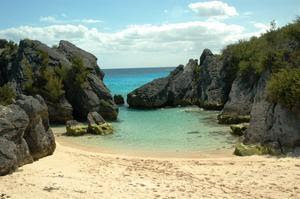
Bermuda’s public beaches are free, accessible and impeccably clean. Most days they unencumbered by the masses, allowing the feeling of being on a private beach. There are no boardwalks or amusements, no planes flying overhead with advertising banners, and only occasionally will you encounter a resident who has set up shop to sell food or local wares along the paths leading to the water. Most of the resort beaches are private, only accessible to hotel guests. Be sure to check out Horseshoe Bay, Warwick Long Bay, and Church Bay (where my husband surprised me by getting down on one knee and proposing following a fabulous day of snorkeling here), and Jobson’s Cove, one of the most serene, picturesque beach destinations I’ve discovered.

Culture and economy
Bermudians are a proper, somewhat conservative people. They are friendly and sincere mostly, even toward tourists who they see as a vital and welcome economic driver. In Bermuda, you’ll find yourself comfortable with approaching a stranger on the street to ask a question—any old question at all—and it’s easy to find yourself engaged in interesting conversation with the locals. They are very polite and particularly accommodating—just good stand-up people, by and large. But the rules of conduct for visitors are strict. Obey the laws, which sort of goes without saying.
  • Don’t try to bring drugs into the country—as members of Ashford & Simpson’s band found during a customs’ search (we’d been on the same flight, and witnessed this all go down).
  • Do not pollute. It’s an incredibly clean country, and they’d like to keep it that way.
    Be sparing with water. “Water, water everywhere, and not a drop drink,” I think the saying goes. Water conservation is one of the reasons behind Bermuda’s distinctive architecture, incidentally—the roofs designed to capture rain water.
  • Dress appropriately. For men, Bermuda shorts with jacket, dress shirt, knee-high socks and loafers are commonplace—for business men and dressier occasions. Slacks—for men and women—is preferred over jeans. Shorts and t-shirts are acceptable—also for both genders—when some outdoor activity calls for more casual and functional clothing. Bermudians frown upon the practice of wearing bathing suits outside of the beach or pool-side context. And bathing suits should err on the side of modesty; thongs or banana hammocks are not acceptable (and may even be contrary to law, if memory serves). If nude sunbathing is your preference, I doubt you’ll find Bermuda a haven. Nor will you find Bermuda to offer much in the way of nightlife—which is the primary reason why it may not be the vacation of choice for all. While there are a few hoppin’ bars along the port of Hamilton, the crowds there tend to be young and sort of remind me of any cheesy, sticky-floored beach bar on an East-Coast boardwalk. And most establishments shut down fairly early compared to our standards.

And finally, Bermuda is expensive. Not just to vacation there, but to live there. It doesn’t manufacture and export much, and you feel the cost of all their importation labors in what you pay at the debit-card machine. Nothing is cheaper in Bermuda.

Climate
Bermuda’s weather is fairly predictable. There are rainy months, especially during hurricane season. Yes, the island is susceptible to the alphabetically named forces of nature, but it’s a rare event. In the summer months, it’s hot—really hot—but the evenings usually bring some breezy relief. And it can get fairly cold there in the winter. Think Carolina-coastline cold. My favorite time of the year to visit is during the early spring. The temperature of air and sea is just right.

Accommodations
I have yet to find anyone who has had an unpleasant experience at any of Bermuda’s resorts—most of which offer lovely accommodations, convenient access to the beach, first-class dining experiences, and courteous, friendly staff. There doesn’t seem to be a “bad choice” on the island when it comes to hotels that range from very small to very large. I am happy to recommend a few where I’ve stayed and thoroughly enjoyed myself:

Pink Beach Club, Tucker’s Town: http://www.pinkbeach.com/
I discovered the Pink Beach Club while searching for an intimate setting—and knowledgeable staff—for my destination wedding in 2001. It was that staff—our in-house wedding coordinator, in particular—who sold me on the lovely but pricey resort.


Though we had envisioned a beach ceremony, the thought of wind and sand wasn’t very practical, so we opted to hold it in the gardens, and stood beneath a Bermuda moongate—said to ensure good luck.

I believe most of the rooms—large, airy spaces, suite-like—are beach front. Breakfast and lunch is offered pool-side or in the main dining room, and consists of standard American-style breakfast fare and pub grub. But in the evenings, the main dining room is rightfully packed with guests decked out in their Sunday bests; the more well-to-do women break out the jewels for the nightly experience, a multi-coursed gastronomic adventure.

During our 10-day honeymoon stay here, we became friendly with—and fanatical about—the resident sommelier, Thierry, who not only guided us through our wine selection every evening, but would reappear at the end of our meal, toting open flame and an I-dare-ya attitude, as he offered to flambé something for us. Dinner and a show, to boot!

We had Thierry light lots of things on fire—dark bing cherries soaked in a dark, rich liqueur. We lit up a Bananas Foster one evening. By the end of our trip, we’d run out of ideas for our flambé chef, and just asked him to torch our liqueur-brimming coffee drinks, still much to our amusement. It never got old.

We enjoyed mornings at the Pink Beach most of all. Groggy-eyed, we’d sit out on our balcony and marvel at the sunrise and brilliantly color parrot fish that lollygagged on the thin surf just below us.

Pompano Beach Club: http://www.pompanobeachclub.com/
I’ve personally stayed here once, and have known others who have enjoyed their time here, as well. The accommodations (at least during the time of my stays) were a little more rustic—more classically “beachy”—than, say, the Pink Beach Club, but it’s comfortable and clean, and has a beach inlet that serves as the gateway to great snorkeling. A rugged cliff-like shore line surrounds the beach, providing sanctuary for colorful sea-faring creatures. At low tide, it’s easy to see the pristine bottom of the ocean floor as you swim out the coral reef, where even more spectacular snorkeling awaits. It was here where I once swam through an entire school of baby barracuda. They are kind of scary up close and personal like that.

Pompano, too, boasts a formal dining room and exceptional food, and a small bar for pre- and post-dinner libations and live entertainment. I don’t know if he’s still tending bar there, but if he is, tell Mervyn I said, “Hello!” He makes the best cocktails and pours the best beer on the island, I’m convinced.

Elbow Beach Club: http://www.mandarinoriental.com/bermuda/
This resort is the first place I bedded down in Bermuda. Back then, the hotel was sort of tired and antiquated, in the old-school beach style, a la Hotel del Coronado of San Diego fame. Since then, it’s undergone a profound makeover, and I understand it’s first-class all the way, very decadent.

Speaking of renovated properties … Michael Douglas’ family’s estate, the Ariel Sands—where Michael, Catherine and clan live part of the year—is getting a facelift. It’s on my list of potential places to stay the next time I find myself Bermuda-bound. Keep track of the renovations and reopening here: http://www.arielsands.com/

And though I haven’t personally stayed at the Sonesta (now called the Wyndham Spa & Resort, I believe), I understand it’s quite decent. Though nestled in a gorgeous section of the South Shore, it always seem too crowded and stereotypically “high-rise beach hotel” to me. Even for those not residing there, the Sonesta welcomes visitors to its outdoor lunch hot spot, and some of the access to the islands water sports—like scuba diving—can be found on this property. http://www.bermuda4u.com/Hotels/wyndham.html

For a more quaint experience, consider renting a private home or cottage, or opt for one of the island’s more intimate B&Bs.

Getting Around
Because the country is so contained, it’s easy to get around, and unlike other Carribean-island destination, it’s not only safe—but preferable—that you leave the confines of a resort and explore the country in total.

There are no rental cars in Bermuda. Unless you’re a citizen, you have no license to drive here. You can, however, rent a scooter and get around seamlessly and inexpensively. This has always been my transportation preference.

There are also plenty of taxis (note: very expensive) and pretty efficient public bus routes.
I should also caution against the scooters if you’re not comfortable on two wheels. Traffic, though sparse, moves quickly, and local commuters and commercial vehicles expect you to keep pace.

By the way, they drive on the left in Bermuda, and it’s unwise to travel the sometimes treacherous, tight roads if you’re not up for the adventure. And most definitely do not attempt to scooter around after cocktails. It is not only foolish—in that you’re likely to kill yourself or someone else—but also is very much frowned upon and prosecuted by local officials.

Food & Beverage
It’s hard for me to categorize Bermudian cuisine. Definitely internationally inspired, fresh fish and seafood are abundant. British, French and Carribean flavors and ingredients are commonplace on most menus.

Though the island boasts some great brunch/lunch and casual-dining joints, foodies will most likely prefer a resort’s meal plan, which usually includes breakfast and dinner. And by “dinner,” I mean six or more courses of amazing, interesting, inspired dishes, finished off with hand-crafted desserts. You’re expected to dress for dinner in Bermuda, by the way—jacket and tie is preferred for the gentlemen.

Some of the resorts offer meal plans that allow you to visit other cooperative resorts and dine there. I recommend you take advantage of this, of the varying chefs and magnificent views.
If there’s a national dish, I imagine it would be “Bermuda Fish Chowder,” a spicy, rich-with-sherry concoction you should try at least once. Epicurious offers this recipe for Bermuda Fish Chowder:
http://www.epicurious.com/recipes/food/views/Bermuda-Fish-Chowder-104011

Japan has its sake; France its champagne. Mexico is known for tequila. For Bermuda, it’s Gosling’s Black Seal Rum (http://www.goslingsrum.com/), Rum Swizzles (http://www.drinksmixer.com/drink1198.html) and Yellowbirds (http://www.drinksmixer.com/cat/3235/).

No trip to Bermuda is complete without an afternoon of al fresco dining and a steady supply of swizzles at The Swizzle Inn (http://www.swizzleinn.com/). Its unofficial motto: “Swizzle Inn, swagger out” is apropos.

Things to do
If just kicking back and relaxing on a beach isn’t your thing, and you prefer more adventuresome pastimes, have no fear. Scattered about the island, you’ll find a slew of water sports—everything from snorkeling, snuba, scuba and helmet dives to parasailing, kayaking, charter fishing, and glass-bottom boat and sightseeing cruises.

If, like me, your delicate skin can only take so much sea and sand in a week, there’s plenty of other things to see and do in Bermuda!

Need a brisk workout following a night-o-swizzles? Scooter or bus to the Gibbs Hill Lighthouse and climb all 117-feet worth of stairs for one of the best vantage points on the island. http://www.bermuda4u.com/Attractions/bermuda_attractions_gibbs_hill_lighthouse.html

Play golf: http://www.bermuda-online.org/golf.htm

Check out the Bermuda Aquarium, Museum & Zoo: http://www.bamz.org/

Take in some art at the Bermuda National Gallery: http://www.bermudanationalgallery.com/

Stroll the beach on horseback: http://www.bermudatourism.com/181.aspx

Stop and smell the roses at the Bermuda Botantical Gardens: http://www.bermuda4u.com/Attractions/bermuda_attractions_bermuda_botanical_gardens.html
Shop: There are plenty of shops within a few blocks’ radius of Hamilton proper. It’s an odd blend of cheeky tourist traps hocking Bermuda souveniers, old family-business clothiers and importers of British goods on one block, retail chains on the next. There are fast food joints there now, which I hadn’t recalled being there within two decades past. Some local artists have set up shop down the alley ways off the beaten path. And considering Hamilton is a port town and capital, it’s hustling and bustling with the 9-to-5ers who keep the business of Bermuda running. Better shopping, in my opinion, can be found in St. George. http://www.bermuda-online.org/seetown.htm

Several times, I’ve ventured to the furthest tip of the island to visit the Royal Naval Dockyard, which has a super-cool Maritime Museum, watched over by a statue of Neptune. Here, too, you’ll find Dolphin Quest, which I have only observed, because it’s often knee-deep in tourists who want a chance to pet a dolphin. You don’t really get to “swim” with them as the advertisements imply, by the way. And I recall it to be somewhat cost prohibitive. But the dockyard and the maritime museum are well worth the trek and price of admission. http://www.bermudatourism.com/216.aspx

And don’t miss the sort-of kitschy Devil’s Hole Aquarium: http://www.devilshole.bm/ I’ve been there once, on a day when few other tourists were there. We had fun watching the turtles glide about, and were told we were very lucky, indeed, because “Henry is out!” the attendant informed us. Henry is the aquarium’s shy, resident moray eel. To this day, my husband uses the phrase “Look, Henry is out,” to describe less innocent sightings.

And if you’re visiting during a holiday, be sure to ask the locals about how they’re celebrated. For example, Bermuda Day—in May—is marked by a grand parade through the streets of Hamilton. The elaborate costumes, music and skits make it a must-see spectacle. http://www.bermuda-online.org/pubhols.htm

Never gets old
It was during one evening venture to Hamilton that I’ve always thought really exemplified the generosity and spirit of its residents. My husband and I were celebrating our final night in country, following 10 perfect days there. We’d done our share of relaxing and wanted to hit the town following another awesome meal at the resort. We took a taxi into town, and it deposited us right on the main drag. We went into what I’m guessing was Bermuda’s most populated bar and had a few beverages while listening to an endless loop of bad dance music and reggae.

There, we met a young guy—whose name escapes me now, so we’ll call him “Reggie.” We got to talking, learned a little about Reggie’s story, about growing up in Bermuda. He asked us questions about life back in the States. When last call came too fast, he invited us to what he called a “private” after-hours club. Let me just say, in another island scenario, I probably would see red flags, remember horror movies where people are abducted and sold into human trafficking rings by throwing caution to the wind in this way. In Bermuda, it’s different. And Reggie seemed sincere and trustworthy. We followed him through the streets, deeper and deeper into the real Hamilton, the areas where most tourists never see, where people really work and grow up and lead their lives. He took us to a little hole-in-the-wall place, and couldn’t help but notice that we had fairer skin than all the other Bermudian patrons.

We got an unmistakably icy reception at first. Customers looked upon us skeptically, as we bellied up to the bar. Reggie disappeared to the loo, and I began to wonder how well-liked he was among the patrons. This was no “Cheers,” and our Reggie was no “Norm.” Men and women sort of snarled at Reggie or shook their heads in protest as he passed by their tables.
The bartender, a large man, ignored us as long as he could, and finally took our drink orders and began to slowly mix them for us.

Suddenly, we heard a voice from across the bar—the voice of an angel it seemed to me in that awkward moment—calling out our names. I turned and recognized the friendly face of Carol, a server from our resort’s restaurant. We’d made small talk with her while she placed bagels or sandwiches before us. She had a great sense of humor and was a lot less stuffy than some of the other staff.

Carol called us over and greeted us with bear hugs. Instantly, the fog lifted, and we were not only welcomed by those around us, we were celebrated. Carol knew everyone there, and introduced us around. We talked about her family and Philadelphia, and gossiped about some of the patrons that she’d point out and giggle about. She had an infectious laugh and had us laughing and drinking more that night than we’d planned to.

It was Carol who introduced me to Frangelica, and who swore that the amber nectar is hangover proof. And Carol who let us pile into car in the wee hours of the morning, and took us to another already-closed bar, where the owner treated us to cocktails on the house and free reign of the sound system. Carol stuck to Cokes. I stuck with Frangelica.

It was near dawn, I think, when we were back on the street and sans taxi to take us back to our hotel. Carol, a good sport, took pity on us and drove us back to the dock where the cruise ships pull in, where we caught one. It was a long, fun night—one of those travel experiences when you get a good feel for the people, the culture, and make a friend or two. When we said goodbye, we promised to meet again, “for shopping in Philadelphia,” Carol suggested.

That pretty much sums up why I love the country, adore its people, marvel at its geology. It’s an expensive alternative to other similar Carribean islands, but I always feel that you get what you pay for, and for me, I’ve always found it to offer a smart return on my investment.

Thursday, October 15, 2009

Oktoberfest in Philadelphia

By G.A. Peck

“You’re not German, are you,” the man to my right asked. This former priest, I was convinced, was sort of hoping—given my fair skin and red hair—that I was one of his own kind, Irish.

I had to laugh, for I’d always assumed that with the first name “Gretchen”—not to mention my maiden name, “Burchardt,” which of course he couldn’t possibly have known—was sort of a dead giveaway. It’s legend among my family that had I been born male, I would have been saddled with the name “Otto,” after my paternal grandfather. Certainly, it would have been a hard name to carry as a child—an Otto among a sea of Michaels and Johns and Andrews.

For many years of my youth, I secretly thanked my lucky stars that I was born a girl. Today, however, with years of maturity under my belt, I might well have appreciated the namesake, for I miss my grandfather.

I adored my “Pop-Pop,” and wish he hadn’t died so early in my life. He—with his omnipresent glass of iced tea in hand, his booming voice and hearty though infrequent laughter, and the scented shroud of black-cherry pipe tobacco—doted on me like none of his own children. He spoiled me rotten with small gifts of lollipops and shiny quarters drawn from the depths of his pockets. Once, he bought me a new pair of shoes when I complained that the ones I was wearing were too small and hurt my feet. He was that kind of grandfather, kind and observant. It was my Pop-Pop who regaled me with stories of ....Germany....—how the mountains soared endlessly, how the air seemed so much cleaner there, how jovial its people are. It was a romantic description of the country, I realize now. But then, Germany seemed like a magical place to me, and I dreamed of visiting it and possibly living there one day.

When I learned in school about Germany’s horrific past under Hitler’s rule, I was ashamed of being German. I wished I could change my name, and I felt the stares of others when we studied WWII in history class. Some teased me about my heritage and accused my ancestors of grave actions. Some teased me for how I looked—not classically pretty; rather, classically German, with a long, narrow face and slightly upturned nose. I told my grandfather about their teasing, and despite his usually stoic demeanor, he wrapped me in his arms and said, “They may not think you’re beautiful, but what do they know? In Germany, you’d be considered one of the most beautiful girls. You’d be treated like a princess.” And his kind words—true or not—sustained me when the kids were cruel.

I was thinking about this when the former priest was asking me about my heritage. We were sitting at a long table among many long rows of tables, beneath a circus-like tent, listening to an oompah band and hoisting plastic cups brimming with Warsteiner beer.

This was the second time I’d attended the Cannstatter Volksfest Oktoberfest (http://www.cvvphilly.com/fest.html). Two years before, my husband and I had spent a day there at the recommendation of one of his colleagues. This year, we went with a larger contingent—that co-worker’s family (a blend of Irish and German, mirroring my own) and some friends who ventured all the way from central Jersey to spend the day with us.

It was a perfect almost-fall-like day—sunny and crisp for a Labor Day weekend. We drank and dance and ate and laughed under the big tent, surrounded by other families who made it an annual event—a festival attended by thousands but with the cozy ambience of a neighborhood block party. I felt comfortable there, for lack of a better adjective.

A big fan of people watching, I was in my element. Upon paying my $6 entry fee, I was greeted by Philadelphia District Attorney Lynne Abraham, who handed me a pamphlet that declared this year to be the 137th festival of its kind. We strolled and passed by an assortment of vendors selling German mementos like beer steins and lederhosen and wreathes made of silk flowers and ribbons. Later, after a few beers, my husband bought me one of those wreathes for $10—in pink and white to match the t-shirt I’d chosen for the day.

There seemed to be a much bigger crowd this year, perhaps due to the impeccable weather. Many of the attendees were older folks. Occasionally I’d pass by someone speaking German, and I secretly cursed myself for not having studied the language more seriously. It was nice to see some younger people, too—the next generation committed to keeping the tradition alive. My husband’s co-worker told us of how he’d been coming to the Volksfest all his life, practically, and that one of his favorite family photographs was one of his mother at the festival, many years before, holding him as a baby in her arms.

We stood in fast-moving lines for tickets to buy beer and food—hearty platters of bratwurst and smoked pork chops, German potato salad, sauerkraut and funnel cakes. “We are not a thin people, us Germans,” I joked with my friend as we discussed the food and the girth of some of those around us.

Later, my husband and I took to the dance floor for the requisite “chicken dance,” and some polka lite. The band leader led chants in German, and the crowd erupted in cheers and applause.
When we were good and buzzed from the free-flowing pitchers, we went to one of the stands, equipped with a roulette wheel of sorts. For a quarter each, he chose a few numbers and after a few spins walked away with his prize, a white paper bag filled with German lunchmeats. How classically German to crowd around and jostle for a chance at winning meat.

Toward the end of the day, the crowd gathered at a building crafted to look like a windmill, and enjoyed the annual Altweibermühle, “The True Fountain of Youth.” Dressed as bakers, elderly German men would miraculously turn an old woman (really, just a girl dressed in an ugly Halloween mask and wig) into a beautiful maiden by churning them up in the mill and spitting them out the shoot. One by one, the “old ladies” were tossed in, only to exit down the metal slide in their new St. Pauli Girl-esque form.

We capped off the day with shots of Apple Korn, a sweet liqueur that went down smooth as cider. The men among us bravely sampled shots of Schwartzhog, a dark syrupy concoction that I sniffed and then decided to pass on. The next day, my husband would wish that he’d taken a pass on the beverage, too.

There were amusement rides for the children, and everyone took time to marvel at the crafted tower made entirely out of harvested fall vegetables.

The hours passed easily and quickly, and I grew a bit melancholy when it was all said and done, when I was sober and driving my not-so-sober husband home. I reflected back on the day—the spectacle of it all, what great friends we have, and how despite the common theme of alcohol, there were no drunken idiots, no bar-like brawls. Just smiles and laughter and memories being made.

I thought how much my grandfather would have enjoyed it so, and I hoped somehow that he was watching over me, happy to see me so proud of where we came from, of the good-natured, fun-loving people we are.

Lobster Cioppino

By G.A. Peck

I was craving seafood the other day, so I whipped up a little lobster cioppino and served it with a few thick slices of crusty-on-the-outside, soft-on-the-inside sourdough bread. Here’s how I made it:

Ingredients
One (1) good-sized lobster, 1lb or 1.5lbs. will do, preferably a female
Two (2) dozen fresh mussels
One (1) dozen fresh shrimp, medium to large in size
One (1) large sweet onion, diced
One (1) cup of white wine
One (1) 15-oz. can of tomato sauce
One (1) 7-oz. bottle of clam juice
One (1) large can of crushed tomatoes
Three (3) cloves of garlic, chopped
One (1) heaping tablespoon of red pepper flake
One (1) tablespoon of olive oil
Salt and pepper

Directions
Par-boil the lobster for approximately two minutes. Allow to cool. Remove roe (which may still be black or green; it will turn red when cooked) and set aside. Remove body, reserving the tail and claws. Pre-crack them with a butcher knife, to make them easier to eat when ready to serve.

Pre-heat large stock pot to medium-high, and add olive oil, enough to coat the bottom of the pot. Allow the oil to come up to temperature; it will begin to ripple. Add diced onions and sauté until slightly translucent. Add chopped garlic, red pepper flake and lobster roe. Cook for two minutes over medium-high heat; be careful not to burn the garlic.

Add about a cup of dry white wine, tomato sauce, clam juice, crushed tomatoes, and a pinch of salt and pepper. Simmer over medium-low heat for 30 minutes.

Rinse mussels, and clean, de-head (if needed) and de-vein the shrimp.

Add mussels, shrimp and lobster pieces to the pot. Cover and simmer for a few minutes—just long enough for the shrimp to cook thru and for the mussels to open up. Discard any mussels that do not open. Serve in a deep-dish bowl with hunks of sourdough bread to soak up all the yummy juice.

All Rights Reserved, Simply Sibarita 2009.

Comfort Food: Venezuela Style (Part 2)


I wrote yesterday about my love for arepas, how discovering them while visiting relatives in Venezuela may very well represent the start of my interest in food. I make a batch myself, every so oftn. The ingredients vary, and I typically take an everything-but-the-kitchen-sink approach. I must confess, I don't often measure, either. Mostly, I toss and stir and blend in the flavors by sight and periodic tasting.

The arepa is not bound by any tradition or rules. The little cornmeal pocket can hold anything from seafood ceviches to roasted vegetables, from beef to chicken to lamb to pork. Think of the arepa as a vehicle deliciously intended to transport classic favorites and exotic delicacies from the plate to your mouth. Below, you’ll find the recipe I followed last night, and they turned out oh so good.

And following the recipe, don’t miss some great links, all about arepas!—G.A. Peck
-------------------------------------------
Braised Beef Arepas

Ingredients
2lb. beef roast (can be any cut you prefer, but a little fat running through it is preferable and makes it easier to shred)
1 tablespoon of vegetable oil
Salt (preferably kosher or sea salt)
Pepper (I use fresh-ground, multi-colored peppercorns)
2 cups of organic beef broth (can also substitute vegetable broth)
1 cup of dry red wine
1 large yellow onion
2 red bell peppers
2 yellow bell peppers
1 spicy pepper (I used a hot banana pepper)
1 32-oz. can of organic diced tomatoes
2 cups of Goya masarepa
3 cups warm water
A palm full of fresh cilantro, washed, dried and diced
1 15-oz. can of black beans (or make them from scratch, according to dried beans package instructions)
¼ cup of olive oil

Here’s how I make them:
I start with a large, deep fry pan. Heat the pan, and when hot, add the 1 tablespoon of vegetable oil. Give it a turn in the pan to coat.

While the pan continues to heat, season the beef with salt and pepper. Add to pan and sear on medium-high heat until the meat is browned on both sides, sealing in the juices, but not cooking all the way through. When done, transfer roast to Nesco roaster (or slow cooker with a relatively high-heat setting). Set to 250-degrees, for a slow simmer. Add 1 cup of beef broth, 1 cup of red wine—in this case, I used a cabernet sauvignon from Argentina—and 1 teaspoon each of coriander, crushed hot red pepper, and 2 bay leafs. Allow to simmer and reduce for approximately one hour.

In the meantime …
Deglaze the pan used to sear the beef with 1 cup of beef broth. Scrape bottom of pan with wooden spoon or spatula until all the brownings are dislodged from the pan and incorporated into the liquid.

Add one diced yellow onion, 2 diced red bell peppers, 2 diced yellow bell peppers, and one diced hot banana pepper. Simmer veggies until they begin to soften. Add one 32-oz. can of organic diced tomatoes; season with salt and pepper; and simmer for approximately 30 minutes. The flavors will meld and the mixture will begin to condense and thicken a bit.

Transfer vegetable mixture—a homemade “sofrito” of sorts—to the roaster, covering the meat entirely. Cover and cook at 250-degrees for another hour.

While the roaster or slow cooker breaks down the meat, allowing it to be easily shredded, and the sofrito to stew it further, prepare the arepas.

My partner in crime tells me that Harina Pan is the best, authentic arepa brand, but I’m unable to find that locally. I use the Goya masarepa white cornmeal—and follow the instructions right on the bag—to create the arepas, first rolling the dough into the ball, then tossing it from palm to the other until I get the desired thickness (about a ½-inch) and circumference (at least three inches across).

Next, I brush the arepas with olive oil and cook at a very high heat on the griddle, flipping it from one side to the other when browned and crunchy on the exterior. The interior of the dough should remain a little soft. When done, allow to cool on a plate or baking rack. Using a fork or bread knife, carefully, open the arepas to form a pocket, into which the stew will be placed. If you’re pressed for time, I suggest just cutting the arepa in half and stacking it or serving open-faced, gourmet style.

Place a large tablespoon of the beef stew in or on the arepa, top with black beans and fresh cilantro and service.

Note: Time permitting, I may also fry up some plantain chips, which can be added for a little extra texture and crunch.

All Rights Reserved, Simply Sibarita, 2009

Comfort Food: Venezuela Style

by G.A. Peck

My first plane ride was quite an adventure—from Baltimore to Miami, from Miami to Caracas, from Caracas to some unnamed village outside of Puerto Ordaz, Venezuela. While it may seem an odd vacation destination for a child—I had just completed the fifth grade at the time—I was really just along for the ride.

My aunt and uncle had taken up residence in Puerto Ordaz, when my uncle had been charged with overseeing plant operations for a major aluminum manufacturer there. They’d been living there for a year or so by the time the rest of my family on my mother’s side—mostly just hicks (I say this with affection) from the small town of Frederick, Maryland—came calling. Most of my family hadn’t been on an airplane, either, let alone to another country.

We had a grand reunion with my aunt and uncle, and the family enjoyed a two-week vacation there, dodging the heavy summer rain and taking day trips to open-air markets and remote villages buried deep in jungle, accessible only by boat, where we would exchange American products, like blue jeans for handmade alpaca rugs and balsa-wood sculptures. Surprisingly, my family took it all in stride, and tolerated the less-than-luxurious lifestyle. Of course, they were no strangers to poverty and struggle, so it makes sense now, looking back, to see that we had that in common with many of the locals we encountered.

We thought we were living the high life when we boarded the ferry and ventured out to Margarita Island or Puerta La Cruz, the “resort town,” which, then, consisted of a few small hotels on the beach, surrounded by hills upon hills of tin shacks. Separated by a single road, the poor from the rich.

When it came time for the vacation to end, my family—my cousins, grandmother, and my own mother and father—boarded the plane home without me. I opted to stay behind in Venezuela. I’d fallen in love with the country, and an older man named Jesus, and I simply didn’t want to go home. My aunt and uncle graciously accepted me into the fold, and I stayed, for exactly how long, I cannot remember—long enough to learn to love the rain, to get by with my basic language skills, and to begin to feel a part of my new family and new community.

While my uncle worked, my aunt and I would busy ourselves with housework and cooking. She was a master at making something out of nothing in the kitchen—like the time she made the most incredible spaghetti dinner out of a box of noodles, a can of tomato paste and a handful of spices. She made the most delicious concoction she called “Mayonnaise Cake” out of flour, mayo, baking powder and powdered cocoa.

She’d also take me into town, where we’d do our shopping at one mom-and-pop shop after the next. Once a week we’d go into town and do the grocery shopping, which I always relished because they had an American-style diner where I could order my favorite, a taste of home: a cheeseburger, French fries and chocolate milkshake, which I proudly ordered in native tongue.
I suppose I was homesick—though I didn’t really want to return to the States—for I craved things that reminded me of home.

I remember finding an English-copy of Helter Skelter at a local bookstore, and thinking how glorious those familiar words were, as I read it cover to cover, despite the fact that it was about some rather brutal murders. I favored those nights when my Uncle would receive a care package from home. One night, he got a bootleg Betamax copy of “10” with Dudley Moore, and my adopted parents allowed me to watch it with them—even the sex scenes! I thought Bo Derek was the loveliest woman ever to walk the sands. I wished my hair was long and blonde so I could have it braided into cornrows.

I got the occasional care package from home, too. One of my friends sent me a recording of Cheap Trick’s “The Dream Police,” and I fell in love with the guitarist from his picture on the sleeve. During the day, I chased the bugs and other critters from our home, which was always crawling with things that I was not prepared to cohabitate with. I’d feed fruit to the toucan who took up residence in our lush backyard. And I adopted a skinny mutt, who I named “Blackie,” because he was black, whom I’d found cowering in an abandoned home down the street. And I wrote secretive love letters to that man, Jesus, who worked with my Uncle and occasionally dropped by the house for dinner.

Eventually, I would trade that crush for another more plausible one, an English boy who lived in a British trailer park slated for aluminum-plant workers from the British Isles. His name was Steve (or Barry or James or something). He was perfectly geeky and I fell for him when he offered to share a bag of salt-and-vinegar crisps with me at a teen party one night. I wanted him to kiss me, but he didn’t until my final night in Venezuela.

I got used to having our car pulled over by local militant-looking police, who were flagrantly guilty of racial profiling. If you looked American, you were targeted. I couldn’t count the number of times my Uncle had been stopped while driving, forced to get out of his car and show his “papers,” at gunpoint. It was such a frequent occurrence that it became more a tedious annoyance than a fearful experience to me.

Initially, I wasn’t a fan of the food I had in Venezuela. It was different, so foreign to me. I dreaded when we ventured out for dinner somewhere, wondering what I’d be able to stomach. I was happy when my aunt and uncle would choose a local German restaurant—“German” in that one of the items on the menu was bratwurst—where I’d order a bowl of tomato soup, a small loaf of fresh-baked bread, and be happy as a clam that they didn’t force me to eat anything spicy.

In time, my palette adapted, and I became more adventuresome. I learned to tolerate, if not enjoy, the heat. One of my favorite “dishes” was the national fast food, the arepa. We’d buy them in town, from street vendors, mostly—these little corn-pocketed bits of heaven. Though the shell of the arepa is fairly standard, the insides ranged from beef stews (check out tomorrow’s blog for the recipe and photos) to breakfast-style egg mixtures. My personal favorite was an arepa with salty, country-like ham, onions and cheese. Our local guy who sold them from a cooler on the street would always save one for me, because he knew how I preferred them to the other more exotic creations, like the ones with tongue, tripe or seafood.

Eventually, my time in country came to an end. I’d overstayed my visa, and my aunt and uncle feared that I may run into some trouble getting out. Their predictions turned out to be true, for when my visa was examined at the local air strip—by some beefy, machine-gun-toting hard-asses—I almost wasn’t allowed to board the plane, bound for Caracas. My aunt whispered in my ear, “Start to cry. Cry like someone is killing you, okay?”

I didn’t know why she wanted me to, but I cried on cue, and eventually I was allowed to get on the plane—I assume because my aunt knew the guards would just want to shut up the screaming kid. I cried when we took off, wondering if I’d ever return, missing my aunt and uncle already. In Caracas, some nice flight attendant helped me change planes. She tucked me into my seat on the huge winged beast, and off I went to Miami, bound for home.

All Rights Reserved, Simply Sibarita 2009